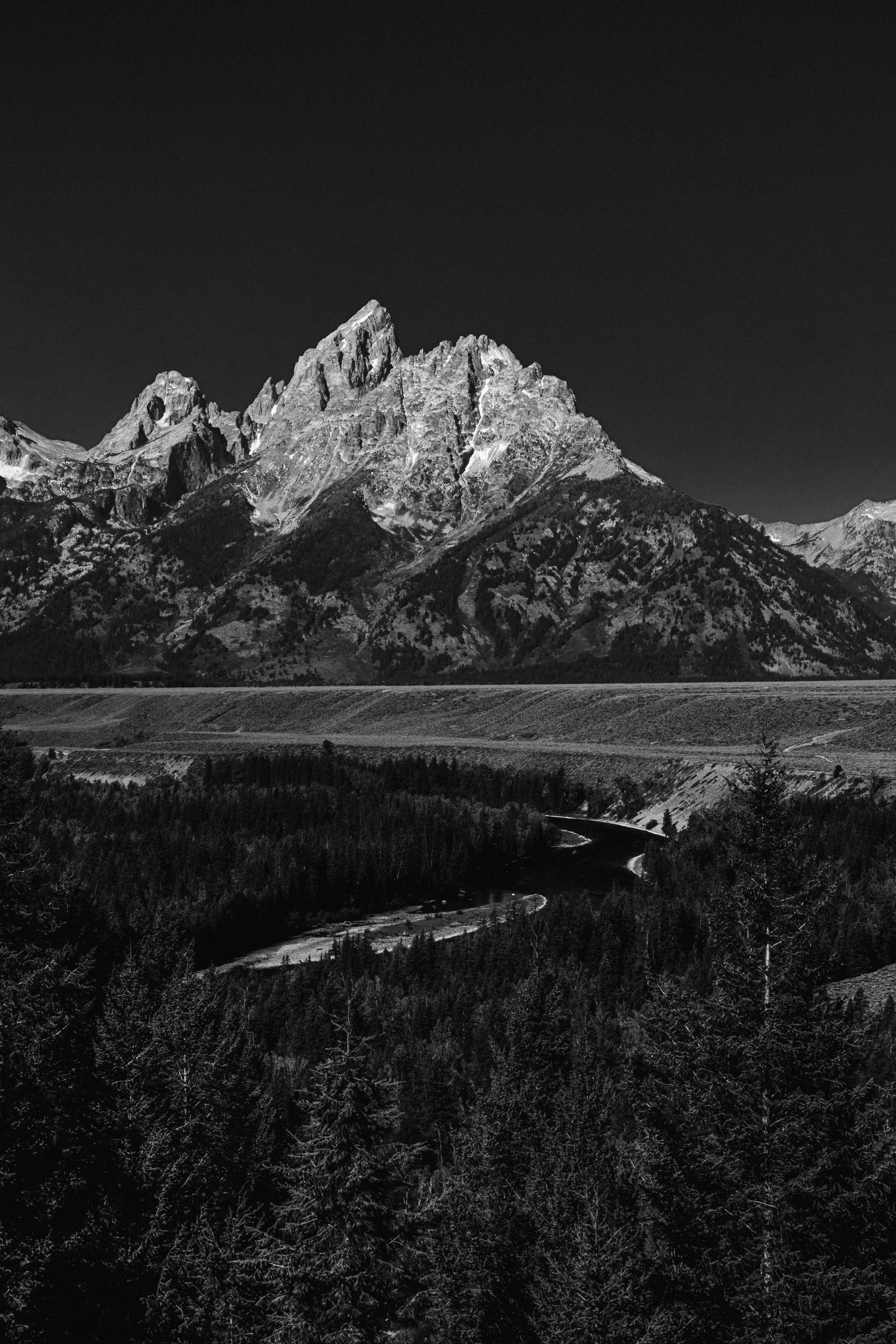
I use digital, 35mm, and medium format because each one changes the way I work.
Not in a magical way. Not in a better-or-worse way. They simply ask different things from the photographer.
Digital is fast, flexible, and forgiving. 35mm is small, loose, and alive. Medium format is slower, more deliberate, and usually more expensive to get wrong.
The subject may be the same, but the process changes. And process matters.
The tool does not make the photograph by itself. But the tool changes what you notice, how quickly you move, how many chances you take, and how much friction exists between seeing something and making a frame.
That friction can be good.
Digital photography
Digital is the most practical tool.
It lets you work quickly. You can adjust exposure, review images, shoot in changing light, bracket difficult scenes, and carry a huge amount of image-making capacity in one camera body.
For landscape work, digital is extremely useful. Weather changes fast. Light moves. Clouds break. A scene may only work for a few seconds.
Digital gives you room to respond.
It is also easier to experiment. You can try different compositions, exposures, focal lengths, and crop ideas without worrying about film cost.
That flexibility is real. For commercial work, travel, events, and fast-moving conditions, digital is hard to beat.
What digital does well
Digital is excellent for:
- Changing conditions
- Difficult exposures
- High dynamic range scenes
- Fast iteration
- Travel efficiency
- Color work
- Low-light flexibility
- Large files
- Fast delivery
- Commercial work
Digital also makes the edit process more immediate. You can see what you made, make selects, process files, and prepare images for web, print, or client work quickly.
For AI-powered work, digital also fits naturally. It already lives in the same ecosystem: files, screens, systems, workflows, outputs. That is one reason digital is so central to modern image-making. It is not just the capture tool. It is part of a whole system.
The downside of digital
Digital can make you move too fast.
Because there is almost no penalty for taking another frame, it is easy to overshoot. Easy to keep moving. Easy to make too many images and spend less time with each one.
That is not a digital problem exactly. It is a human problem. But digital makes it easier.
The challenge with digital is to keep the patience of slower tools. To still stop. Still look. Still wait. Still decide before pressing the shutter.
Digital is at its best when it gives you flexibility without making you careless.
35mm film
35mm is the most casual and portable of the film formats I use.
It is small, fast, and easy to carry. A 35mm camera can go almost anywhere. It does not demand a big production. It works well for travel, family, documentary moments, landscapes, walks, and everyday seeing.
A roll usually gives you 36 frames. That is enough to be flexible, but not infinite. You think more than digital, but you are not locked into every frame the way you might feel with larger film.
35mm has a looseness to it. That is part of its appeal. It can go with you when a bigger camera would stay home.
What 35mm does well
35mm is excellent for:
- Travel
- Walking around
- Quick observations
- Personal work
- Family/documentary images
- Small cameras
- Everyday carry
- Grain and texture
- Imperfect images
- Sequences and contact sheets
For landscape work, 35mm can feel more spontaneous. You may make an image because the camera is with you, not because you planned a serious shoot.
That matters. Some photographs exist only because the camera was easy to bring.
A 35mm camera lowers the barrier between seeing and photographing. It lets you respond without turning every frame into a production.
The look of 35mm
35mm has a different feeling from larger formats and digital.
The grain is more visible. The image can feel more textured, less polished, and sometimes more alive. It does not always have the smoothness or detail of medium format, but that is not necessarily a weakness.
Sometimes the roughness is the point.
35mm can make a photograph feel less formal. More immediate. More like something seen and kept.
For black-and-white work, that texture can be beautiful. Grain is not just a technical limitation. It can become part of the image’s character.
But 35mm also has limits. Very large prints require more care. Exposure matters. Scanning matters. The film stock matters. The lens matters.
The format has charm, but it still asks for craft.
Medium format film
Medium format is slower.
The cameras are usually larger. The film is more expensive. The rolls are shorter. Depending on the camera, you might get 10, 12, or 15 frames on a roll instead of 36.
That changes everything.
You do not fire away. You slow down. You compose more carefully. You check the edges. You think about exposure. You decide whether the frame is worth it.
Medium format makes each photograph feel more deliberate. Not better by default. But more deliberate.
What medium format does well
Medium format is excellent for:
- Landscape work
- Portraits
- Fine-art prints
- Slower compositions
- High detail
- Smooth tonal transitions
- Large negatives
- More intentional shooting
- A stronger print source
The larger negative holds more information than 35mm. That can matter in a print. Tonal transitions can feel smoother. Detail can feel richer. The image can have a different kind of presence.
For black-and-white landscape photography, medium format can be beautiful because the negative gives the tones room to breathe.
A larger negative can make the print feel less strained at larger sizes. It can hold subtle detail in rock, snow, trees, water, and sky.
That does not mean every medium format image is good. It just means the format gives you more to work with when the image is strong.
The downside of medium format
Medium format can be slow, expensive, and less convenient.
You carry more. You shoot less. Mistakes cost more. Processing and scanning can take longer. Some cameras are less flexible in fast-changing conditions.
That is part of the tradeoff.
Medium format rewards patience, but it can punish hesitation or technical sloppiness. You have fewer chances. That can be frustrating. It can also be useful.
When you only have 12 frames, you treat each frame differently. You may not make more good photographs, but you may make fewer careless ones.
35mm vs medium format
The biggest difference is pace and negative size.
35mm feels lighter and more responsive. Medium format feels slower and more intentional.
35mm gives you more frames and more freedom. Medium format gives you more detail and a larger negative.
A simple comparison:
35mm: more portable, more frames, more spontaneous Medium format: larger negative, slower process, more detail, stronger for large prints
One is not better. They do different jobs.
If I am walking, traveling light, or making personal work, 35mm often makes sense. If I am working slowly and thinking about a final print, medium format may make more sense.
The difference is not only what the image looks like. It is how you behave while making it.
Film vs digital
Film and digital are different, but the difference is not only image quality.
The biggest difference is workflow. Digital gives immediate feedback. Film delays the result.
That delay changes your relationship to the image. You do not know exactly what you have. You have to trust the exposure, the moment, the process. Later, when the film is developed and scanned, you meet the photograph again.
That can be frustrating. It can also be part of the pleasure.
Digital is usually more efficient. Film is usually more tactile. Digital is easier to control. Film asks for more acceptance. Digital gives you speed. Film gives you friction.
I think both are useful.
Dynamic range and exposure
Digital sensors are very good at holding detail, especially in modern cameras. You can often recover shadows, protect highlights, and bracket difficult scenes when needed.
Film behaves differently.
Negative film can be forgiving in highlights, depending on the film and exposure. Slide film is much less forgiving. Black-and-white film has its own rhythm, especially if you are thinking about development and printing.
With film, exposure choices can feel more permanent. With digital, there is often more room to adjust later.
Neither approach removes responsibility. Digital files can be ruined by lazy exposure. Film negatives can be ruined by poor technique.
The tool helps, but it does not replace attention.
Grain vs pixels
Film has grain. Digital has pixels.
That sounds obvious, but it affects the feeling of the image.
Film grain can feel organic, especially in black and white. It has texture and irregularity. Digital noise usually feels different. Sometimes it is clean and controlled. Sometimes it is ugly.
A clean digital file can be beautiful. A grainy 35mm frame can be beautiful. A medium format negative can sit somewhere else entirely: detailed, smooth, and still physical.
The question is not which is technically best. The question is which one serves the image.
Which one is best for prints?
It depends on the image.
A digital file can make an excellent fine-art print. A medium format negative can make an excellent fine-art print. A 35mm negative can also make a beautiful print, especially when the grain and texture fit the image.
The print does not care what tool you used unless the tool affects the final object.
What matters is whether the image holds at the intended size and whether the final print feels right.
For very large prints, file quality and negative size matter more. For smaller prints, the differences may be less important. For some images, the character of 35mm film may be exactly what makes the print feel alive.
A good print is not a gear test. It is an image made into an object.
Why I still use all three
I use digital because it is powerful and practical.
I use 35mm because it is light, imperfect, and easy to bring with me.
I use medium format because it slows me down and gives the image more room.
Each tool changes the pace. Each tool changes the kind of mistakes you make. Each tool changes what you notice.
That is why I do not think of the question as: which is best?
A better question is: what kind of work does this tool help me make?
Old tools, new tools
I do not think film is better because it is old. I do not think digital is better because it is new.
They are tools.
A camera is a tool. A lens is a tool. A darkroom is a tool. A scanner is a tool. A digital workflow is a tool. AI is a tool.
The tools change. The craft still matters.
What matters is whether the tool helps you make work worth keeping.
The simplest comparison
Digital is flexible, fast, and practical. 35mm is portable, imperfect, and alive. Medium format is slower, richer, and more deliberate.
All three can make meaningful photographs.
The important part is not the format. The important part is what the format asks from you.